
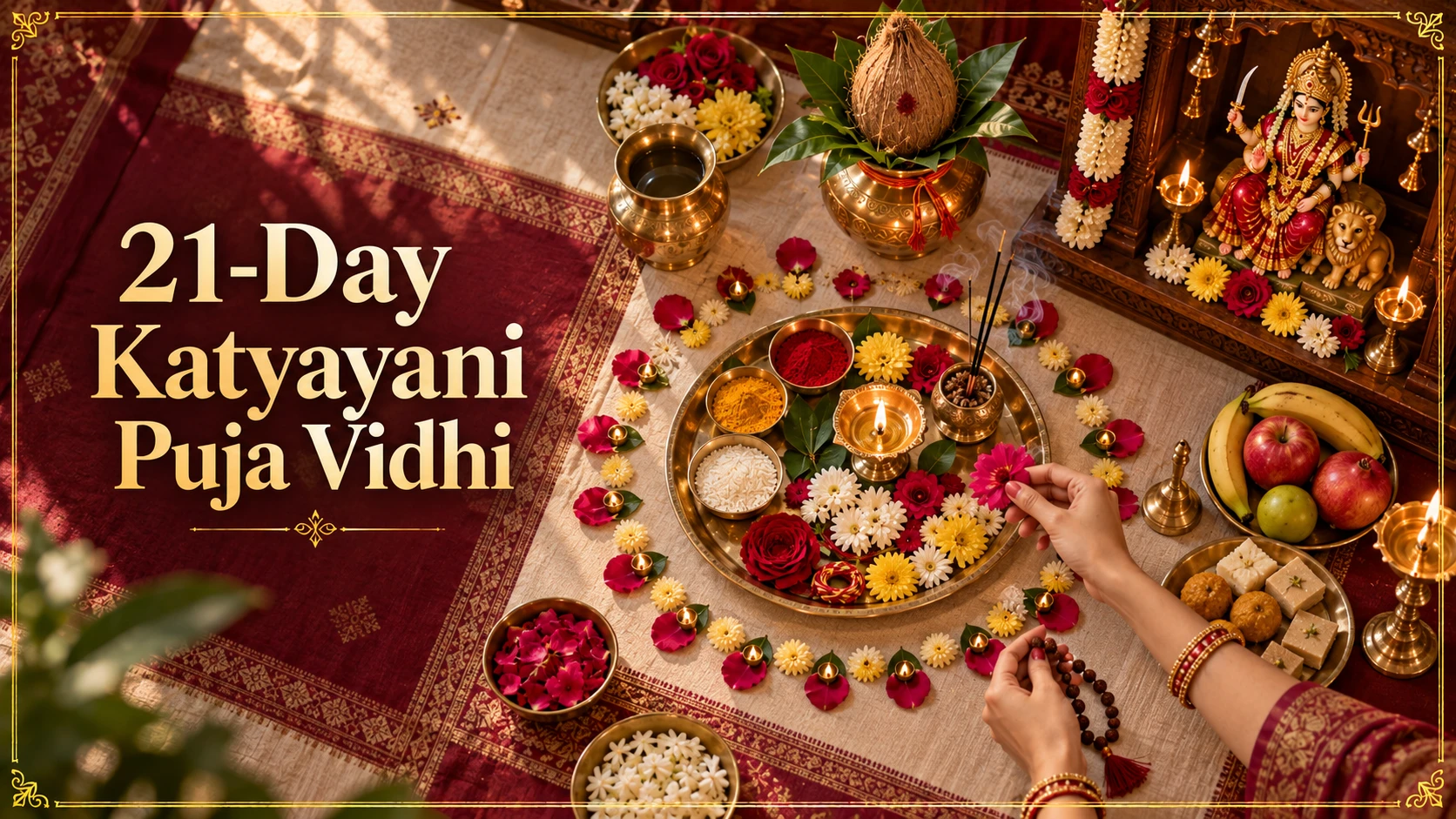
Maa Katyayani is traditionally worshipped by unmarried devotees seeking divine guidance, emotional strength and a suitable life partner. While a simple Katyayani Puja can be performed at home regularly, some devotees choose to follow a disciplined 21-day Katyayani Puja Vidhi for marriage.
This 21-day practice combines daily worship, mantra chanting and a sincere sankalp. It is not a guaranteed method for getting married within 21 days. Instead, it is a faith-based devotional routine intended to develop consistency, patience and spiritual focus.
In this guide, you will learn how to do Katyayani Puja for 21 days, the required puja materials, daily worship steps, mantra, chanting count, important rules and mistakes to avoid.
The 21-day Katyayani Puja is a continuous devotional practice dedicated to Maa Katyayani, the sixth form of Navdurga. During this period, devotees perform a simple daily puja and chant the Katyayani marriage mantra with a respectful intention.
The 21-day duration is followed as a devotional discipline by some practitioners. It should not be presented as a compulsory or universally prescribed duration for every devotee. Puja traditions can vary according to family customs, spiritual guidance and regional practices.
Maa Katyayani represents divine strength, courage and determination. In Sanatan tradition, she is associated with prayers for a suitable life partner and the removal of marriage-related obstacles.
Devotees may perform Katyayani Puja when they are:
The intention should be to receive guidance toward a healthy and compatible relationship—not to control the feelings or decisions of a particular person.
Keep the puja simple, clean and manageable.
| Puja material | Purpose |
|---|---|
|
Main focus of worship |
|
For preparing the altar |
|
Sacred lamp |
|
Fragrant offering |
|
Offering to the Goddess |
|
Traditional puja materials |
|
Sacred offering |
|
Optional ritual arrangement |
|
Optional kalash decoration |
|
Bhog or naivedya |
|
Counting mantra repetitions |
|
For ritual use |
Expensive or elaborate materials are not necessary for simple daily worship. Cleanliness, sincerity and consistency are more important.
A devotee may begin the practice on a spiritually significant day according to family tradition or qualified guidance. The sixth day of Navratri is especially associated with Maa Katyayani, but daily worship does not have to be limited to Navratri.
Morning after bathing is generally suitable because the environment is calm and the mind is fresh. Evening worship may also be followed when morning puja is not practical.
Try to perform the puja at approximately the same time every day. However, devotion should not become a source of fear or anxiety if the timing changes occasionally.
Select a quiet place in your home. Clean the area and spread a red or yellow cloth on the puja platform.
Place Maa Katyayani’s photograph or idol respectfully on the altar. Arrange the diya, flowers, offerings, water and other puja materials neatly.
Take a bath and wear clean clothes before beginning the puja. Sit facing east or north if practical.
Keep your phone and unnecessary distractions away during worship.
Light a ghee or oil diya in front of Maa Katyayani. Offer incense or dhoop and spend a few moments calming your mind.
Always keep the diya on a stable surface and follow appropriate fire-safety precautions.
On the first day, state your intention respectfully before Maa Katyayani.
You may use this simple prayer:
“हे मां कात्यायनी, मैं श्रद्धा और शुद्ध भावना से 21 दिनों तक आपकी उपासना करने का संकल्प लेता/लेती हूं। कृपया मुझे योग्य जीवनसाथी, सही निर्णय और विवाह संबंधी परिस्थितियों का सामना करने की शक्ति एवं मार्गदर्शन प्रदान करें।”
Your prayer should seek a suitable relationship based on compatibility, consent and mutual respect.
Apply kumkum and offer akshat, turmeric and fresh flowers to Maa Katyayani. Offer fruits, sweets or another simple sattvic food as bhog.
If you have prepared a kalash, place it respectfully near the Goddess.
Sit calmly and chant:
ॐ कात्यायनि महामाये महायोगिन्यधीश्वरि।
नन्दगोपसुतं देवि पतिं मे कुरु ते नमः॥
Transliteration:
Om Katyayani Mahamaye Mahayoginyadhishwari,
Nandagopa Sutam Devi Patim Me Kuru Te Namah.
Simple meaning:
“O Goddess Katyayani, embodiment of divine power and supreme spiritual energy, I respectfully pray for your blessings in receiving a suitable husband.”
To understand the mantra’s Sanskrit pronunciation, meaning, traditional benefits and chanting rules, read our complete guide to the Katyayani Mantra for Marriage
हिंदी में मंत्र का शुद्ध पाठ, अर्थ और जाप विधि जानने के लिए हमारा विस्तृत लेख Katyayani Mantra for Marriage in Hindi पढ़ें।
The traditional mantra has feminine wording. Other devotees can worship Maa Katyayani with an appropriate personal prayer or seek guidance from a knowledgeable priest regarding the mantra suitable for them.
Select a number that you can follow consistently throughout the 21 days.
| Number of repetitions | Suggested practice |
|---|---|
|
Short daily worship |
|
Manageable regular practice |
|
One complete mala |
Chant slowly and clearly. Do not hurry merely to complete the count.
After chanting, perform Maa Durga or Maa Katyayani Aarti. Pray for wisdom, patience, clarity and a suitable life partner.
Conclude the puja by offering bhog. After the worship, distribute it respectfully as prasad among family members.
Try to follow the same basic procedure every day. You do not need to repeat the complete first-day sankalp daily. Remember your intention briefly before beginning the mantra.
| Period | Main focus |
|---|---|
|
Establish the routine and learn clear pronunciation |
|
Maintain consistent worship and focused chanting |
|
Continue with patience without becoming anxious about results |
|
Complete the worship with aarti, prayer and gratitude |
If you are beginning with a simple daily practice, first follow our guide on how to perform Katyayani Puja at home for marriage. It explains the basic puja materials, altar preparation, offerings, mantra chanting and daily worship method.
This schedule is a practical devotional structure, not a mandatory scriptural rule.
On the final day:
A devotee may also donate food, clothes or another useful item according to personal capacity. Charity should be voluntary and should not cause financial pressure.
Missing a day unintentionally should not become a source of fear. The appropriate response can differ according to the sankalp and the tradition being followed.
For a simple personal practice, pray for forgiveness and continue sincerely. If you have taken a formal sankalp under a priest’s guidance, consult the same priest before deciding whether to continue or restart.
Avoid presenting one response as a universal rule for every devotee.
Practices regarding menstruation differ significantly between families, regions and spiritual traditions. Follow your personal belief, family tradition and the guidance of a trusted spiritual teacher.
A devotee who does not perform physical rituals during this period may continue remembering Maa Katyayani mentally according to personal faith.
Men may also worship Maa Katyayani and pray for a suitable life partner. However, because the commonly recited marriage mantra is traditionally worded as a woman’s prayer for a husband, male devotees should seek guidance about an appropriate prayer or mantra.
The number refers to the duration of the devotional routine. It does not guarantee that marriage will happen within the same period.
The prayer should seek a compatible and mutually respectful relationship. Spiritual practice should never be used to disregard another person’s free choice.
Do not commit to a large chanting count if it cannot be maintained. Eleven or twenty-one focused repetitions are better than hurried and inconsistent chanting.
Continue evaluating values, communication, family expectations, finances and long-term compatibility. Puja should support thoughtful decision-making, not replace it.
Mantra pronunciation, formal sankalp and elaborate rituals should be checked with a knowledgeable practitioner when there is uncertainty.
A simple 21-day prayer routine can be performed at home. However, devotees seeking a formal sankalp, detailed ritual procedure or havan may prefer priestly guidance.
For guided worship, learn more about Astrouni’s Katyayani Mata Puja for early or desired marriage.
Prepare a clean altar, light a diya, offer flowers and bhog, chant the Katyayani mantra and conclude with aarti. Follow the selected practice consistently for 21 days.
Devotees may select 11, 21 or 108 repetitions according to their capacity. Clear and concentrated chanting is more important than completing a large count hurriedly.
No. It is one devotional routine followed by some practitioners. Simple daily worship, Navratri worship or another duration may be followed according to personal tradition and qualified guidance.
No. The practice is faith-based and does not guarantee marriage within a fixed period.
Fasting is not automatically compulsory for a simple daily puja. Fasting practices vary by tradition and personal health. Avoid restrictive fasting when it may be medically unsuitable.
Yes. A devotee may continue a simple daily prayer without maintaining the same formal routine. If the original sankalp included specific rules, seek guidance before extending or changing it.
The 21-day Katyayani Puja Vidhi for marriage is a disciplined spiritual routine centred on prayer, mantra chanting and devotion to Maa Katyayani. Its value lies in consistency, respectful intention and the emotional clarity developed through regular worship.
Perform the practice without fear, pressure or guaranteed expectations. Alongside spiritual worship, continue practical efforts to find a compatible partner and make responsible marriage decisions.
Copyright © 2026 Astrouni | All Rights Reserved