
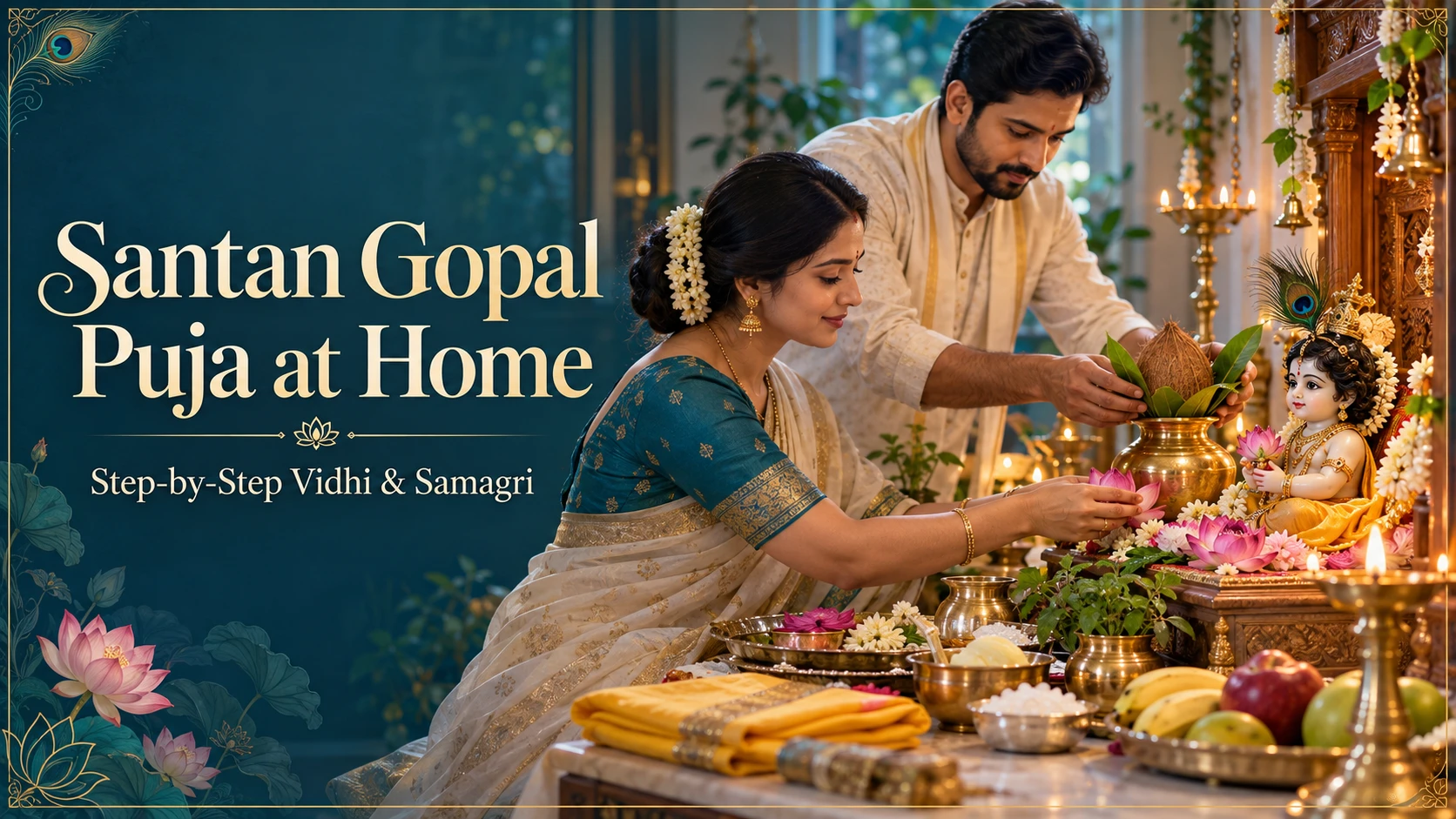
Santan Gopal Puja is a devotional form of worship dedicated to Lord Krishna in his child form, Bal Gopal. Devotees traditionally perform this puja with prayers for children, family well-being and the blessings of Lord Krishna.
If you want to perform Santan Gopal Puja at home, a simple and respectful puja can be arranged with basic samagri, devotional offerings, prayer and aarti. The exact procedure may vary according to family tradition, religious practice and the type of puja being performed.
If you want to understand the complete significance, benefits and details of this puja, explore our Santan Gopal Puja guide before beginning the home पूजा procedure.
In this guide, we will explain how to perform Santan Gopal Puja at home, what items are required, the step-by-step procedure, and the important mantras to include during the puja.
Santan Gopal Puja is the worship of Lord Krishna in his child form, known as Bal Gopal.
Devotees traditionally worship Bal Gopal while praying for children, family happiness, protection and spiritual well-being. The puja can be performed as a simple home worship or as part of a more elaborate ritual according to a particular religious or family tradition.
A home puja does not have to be unnecessarily complicated. The main elements are preparing a clean worship space, establishing the deity, making the appropriate offerings, praying with devotion and completing the worship respectfully.
Before beginning the puja, keep the required Santan Gopal Puja Samagri ready.
Bal Gopal or Lord Krishna idol
Clean puja chowki
Clean puja cloth
Water
Small water vessel or kalash
Chandan
Kumkum
Akshat
Fresh flowers
Tulsi leaves
Diya
Ghee or oil
Cotton wick
Dhoop or incense
Fruits
Mishri
Makhan
Sweets or suitable bhog
Clean cloth for Bal Gopal
Aarti diya or plate
Bell, if traditionally used
Depending on your family tradition, you may also keep:
Gangajal
Milk
Curd
Ghee
Honey
Sugar
Panchamrit
Garland
Peacock feather
Shringar items for Bal Gopal
Conch
Additional flowers
You do not need every item listed above for a simple home puja. Use the items that are appropriate to your tradition and available to you.
Proper preparation makes the puja easier and more organized.
Before starting:
Clean the puja area.
Take a bath and wear clean clothes.
Clean the Bal Gopal idol if required.
Place a clean cloth on the puja chowki.
Arrange the idol properly.
Keep the puja samagri within easy reach.
Prepare the bhog before beginning the main puja.
Keep the diya and incense ready.
Sit comfortably in front of the deity.
Begin the puja with a calm and devotional mind.
If a husband and wife are performing the puja together, both can participate according to their family tradition.
The following is a simple Santan Gopal Puja Vidhi for home worship. A formal Vedic puja can involve additional rituals, mantras and procedures, so those following a specific family or guru tradition should follow that method.
Begin by cleaning the place where you will perform the puja.
Place the puja chowki in a suitable location and cover it with a clean cloth.
Keep the Bal Gopal idol in the center of the chowki.
Arrange the flowers, Tulsi, diya, water and other required items around the worship area.
Light the diya using ghee or oil.
You may also light dhoop or incense according to your usual worship practice.
Make sure the diya and incense are placed safely away from curtains, papers and other flammable objects.
Sit comfortably before the deity and take a moment to remember Lord Krishna in his child form.
You can begin with a simple prayer expressing devotion and asking for the peaceful completion of the puja.
If your family tradition includes a specific opening prayer, follow that tradition.
Sankalp means making a clear devotional intention before beginning the puja.
You can state your intention in simple words.
For example:
“I am performing this Santan Gopal Puja with devotion and faith. I pray to Lord Krishna for the well-being, happiness and blessings of my family.”
If the puja is being performed with a prayer for children, that intention can be included in the personal prayer.
A formal Sanskrit sankalp may be different according to the ritual tradition being followed.
Offer clean water to Lord Krishna.
For a simple home puja, a small offering of water can be included as part of the worship.
If your tradition includes a more detailed ritual procedure, follow the prescribed method.
Abhishek is optional for a simple home puja.
If the Bal Gopal idol is suitable for bathing, you may perform abhishek with clean water or Panchamrit according to your tradition.
Panchamrit may traditionally include ingredients such as:
Milk
Curd
Ghee
Honey
Sugar
After the abhishek, gently clean and dry the idol before dressing it again.
If the idol is made from a material that should not be exposed to liquids, do not perform a liquid abhishek.
Offer chandan, kumkum and akshat according to your family tradition.
Make each offering respectfully while remembering Lord Krishna.
There is no need to use every available puja item if you are performing a simple home worship.
Offer fresh flowers to Bal Gopal.
Tulsi is traditionally associated with the worship of Lord Krishna and may also be offered according to your tradition.
Place the flowers and Tulsi respectfully before the deity.
If you are worshipping a Bal Gopal idol, you may dress the deity in clean clothes.
You can also perform simple shringar according to your family tradition.
For a simple Santan Gopal Puja at home, elaborate decoration is not necessary.
Prepare a clean and suitable bhog for Bal Gopal.
Common devotional offerings include:
Makhan
Mishri
Milk
Fruits
Sweets
Homemade sattvic food
Place the bhog before the deity.
Take a few moments to offer the food with devotion before treating it as prasad.
The Santan Gopal Mantra can be included during the puja according to your family or spiritual tradition.
For this article, the detailed mantra, pronunciation, meaning, jaap count and chanting rules are intentionally not repeated because those topics are covered in our dedicated Santan Gopal Mantra article.
Internal link:
[Santan Gopal Mantra: Meaning, Benefits and Jaap Vidhi]
This keeps the Puja page focused on the puja procedure, while the Mantra page remains the dedicated resource for mantra-related searches.
After the offerings, sit quietly before Bal Gopal and offer your personal prayer.
You may pray for:
Family well-being
Peace at home
Happiness
Good health
Blessings for children
Strength and patience
Spiritual guidance
Keep the prayer sincere and personal.
Santan Gopal Puja should be approached as a devotional practice rather than as a guaranteed way of achieving a particular result.
Complete the main worship with a Krishna or Bal Gopal aarti according to your family tradition.
Light the aarti diya and offer it respectfully before the deity.
After the aarti, offer your pranam to Lord Krishna.
After completing the aarti, allow the bhog to be offered respectfully and then distribute it as prasad among family members.
Clean the puja area after the worship is complete.
If an abhishek was performed, ensure that the idol and surrounding area are properly cleaned and dried.
The offerings used in Santan Gopal Puja can vary according to family tradition.
Common offerings for Bal Gopal include:
Tulsi leaves
Fresh flowers
Makhan
Mishri
Milk
Fruits
Sweets
Panchamrit
Homemade sattvic food
You do not need an elaborate bhog for a simple home puja.
Clean, suitable food offered with devotion is sufficient for a basic devotional practice.
There is no single date that applies to every form of Santan Gopal Puja.
Devotees may perform the puja according to their family tradition, religious calendar or guidance from a priest or guru.
Some devotees may choose Krishna-related festivals or other spiritually significant occasions for special worship.
If you are planning the puja for a particular festival, vrata or religious observance, check the relevant Panchang for the date and local timing.
For a simple daily or occasional home puja, you can choose a clean and peaceful time that fits your devotional routine.
Yes. Devotees can include Bal Gopal worship in their daily devotional routine.
A daily puja does not have to follow the complete procedure described above.
A shorter daily practice can include:
Cleaning the worship area
Lighting a diya
Offering Tulsi or flowers
Offering simple bhog
Remembering Lord Krishna
Reciting the appropriate prayer or mantra
Offering a short aarti or pranam
If you have taken a specific religious sankalp, follow the rules associated with that practice.
Yes. A husband and wife can perform Santan Gopal Puja together according to their family or religious tradition.
They can participate in:
Preparing the puja area
Taking the sankalp
Making offerings
Reciting prayers
Performing aarti
Offering the final prayer
Performing the worship together can also make it a shared devotional practice for the family.
Yes. A simple form of Santan Gopal Puja can be performed at home.
For a basic home puja, you can arrange the idol, samagri, offerings and prayer yourself.
However, an elaborate Vedic ritual may include additional procedures, specific mantras, homa or other requirements.
If you are performing a formal anushthan or a ritual prescribed by your family tradition, follow the instructions of a qualified priest or knowledgeable spiritual guide.
The two are closely related but serve different purposes.
| Santan Gopal Puja | Santan Gopal Mantra |
|---|---|
| A complete devotional worship | A specific sacred prayer |
| Includes several stages of worship | Focuses on recitation |
| Can include offerings, flowers, Tulsi and bhog | Can be recited independently |
| May include abhishek and aarti | Can be part of a puja |
| Focuses on worshipping Bal Gopal | Focuses on mantra practice |
For the complete mantra, meaning, pronunciation, jaap procedure and chanting guidance, visit the dedicated Santan Gopal Mantra article.
A Santan Gopal Stotra is a devotional hymn consisting of verses dedicated to Lord Krishna.
Santan Gopal Puja is a broader worship procedure that may include:
Deity worship
Offerings
Flowers
Tulsi
Bhog
Prayer
Mantra recitation
Aarti
A Santan Gopal Stotra may be recited during the puja if it is part of your devotional tradition.
For the stotra verses, meaning and path vidhi, visit the dedicated Santan Gopal Stotra article.
Keep these basic points in mind when performing the puja at home:
Keep the worship area clean.
Arrange the samagri before beginning.
Use fresh and suitable offerings.
Follow your family tradition if you already have one.
Do not mix different ritual traditions without understanding their procedures.
Perform abhishek only if the idol is suitable for it.
Keep the bhog fresh and clean.
Handle fire, diya and incense safely.
Perform the puja peacefully rather than rushing through it.
Follow specific instructions if you have taken a formal sankalp.
Treat the puja as a devotional practice, not as a guaranteed medical treatment.
No. Santan Gopal Puja is a religious and devotional practice and should not be presented as a guaranteed treatment for infertility or a guaranteed method of conception.
Devotees may perform the puja while praying for children and family well-being.
Anyone experiencing difficulty conceiving should seek appropriate medical evaluation and advice from a qualified healthcare professional. Religious practice can be followed according to personal belief, but it should not replace medical care.
Santan Gopal Puja is devotional worship of Lord Krishna in his child form, Bal Gopal. Devotees traditionally perform it with prayers for children, family well-being and the blessings of Lord Krishna.
Basic samagri can include a Bal Gopal idol, puja cloth, water, diya, flowers, Tulsi, chandan, akshat, bhog and fruits. Additional items depend on your family tradition and the type of puja.
A simple procedure includes preparing the puja area, placing Bal Gopal on a clean chowki, lighting the diya, taking a sankalp, offering water, performing abhishek if appropriate, offering chandan, flowers, Tulsi and bhog, reciting the appropriate prayer, performing aarti and completing the puja with pranam.
Common offerings include Tulsi, flowers, makhan, mishri, milk, fruits, sweets and suitable homemade bhog.
Yes. A simple devotional puja can be performed at home. More elaborate Vedic rituals may require guidance from a qualified priest.
Yes. Both can participate in the worship according to their family tradition.
Yes. A simple form of Bal Gopal worship can be included in a daily devotional routine.
No. Abhishek is not necessary for every simple home puja. If you choose to perform it, make sure the idol is suitable for liquid offerings and follow your tradition.
The timing can depend on your family tradition, religious calendar or the purpose of the puja. For a specific festival or observance, check the relevant Panchang.
No. Puja is a broader worship procedure, while the Santan Gopal Mantra is a specific prayer that can be recited during the puja.
No. A Stotra is a devotional hymn, while Puja is a complete worship practice involving offerings, prayer and other ritual steps.
No. Santan Gopal Puja is a devotional practice and cannot guarantee conception or pregnancy. Appropriate medical advice should be sought for fertility concerns.
Santan Gopal Puja is a devotional form of worship dedicated to Lord Krishna in his child form, Bal Gopal.
A simple Santan Gopal Puja at home can be performed by preparing a clean worship space, arranging the required samagri, making a sankalp, offering water and other puja items, presenting bhog, offering prayers and completing the worship with aarti.
The exact Santan Gopal Puja Vidhi can vary according to family tradition and the type of ritual being performed. For a simple home puja, there is no need to make the process unnecessarily complicated.
The most important elements are cleanliness, sincere devotion, respectful worship and following the tradition that is appropriate for you.
Copyright © 2026 Astrouni | All Rights Reserved